
Accenture: Partners Are Now Core to Enterprise AI Scale
86% plan to increase AI investment in 2026, but only 21% are ready. That gap is where partners and cloud ecosystems win. Plus: AWS AI hit $15B run rate — 260x larger than AWS at the same stage.

Hi, it’s Roman Kirsanov from Partner Insight newsletter, where I deconstruct winning Cloud GTM strategies and the latest trends in cloud marketplaces.
This week:
Accenture’s new report moves ecosystem into the digital core — 86% of organizations plan to increase AI investment in 2026, but only 21% have redesigned processes around it. That readiness gap is where partner value gets created.
AWS AI crossed a $15B run rate — and Bedrock nearly doubled month over month in March, a strong signal that hyperscaler AI businesses are scaling fast (and partner opportunity is getting much bigger).
MongoDB, Quantum Metric, and Tackle break down what actually works in Google Cloud co-sell — from reframing committed spend, to aligning early with the field, to why agents may reshape marketplace distribution entirely.
But before we dive in: in 10 days we're hosting our GCP Marketplace Strategic Breakfast at Google Cloud Next '26.
Dai Vu (Managing Director, Google Cloud Marketplace), Subhash Jawahrani, John Jahnke, and other senior leaders will break down what Next’s announcements actually mean for ISVs and partners. If you’ll be at Next, join us on April 23, 7:30–9:30 am PT.
Why Partners Are Now Core to Enterprise AI Scale
This may be the clearest signal yet that partnerships are now central to enterprise AI strategy. In Accenture’s latest report, ecosystem moved to the digital core.
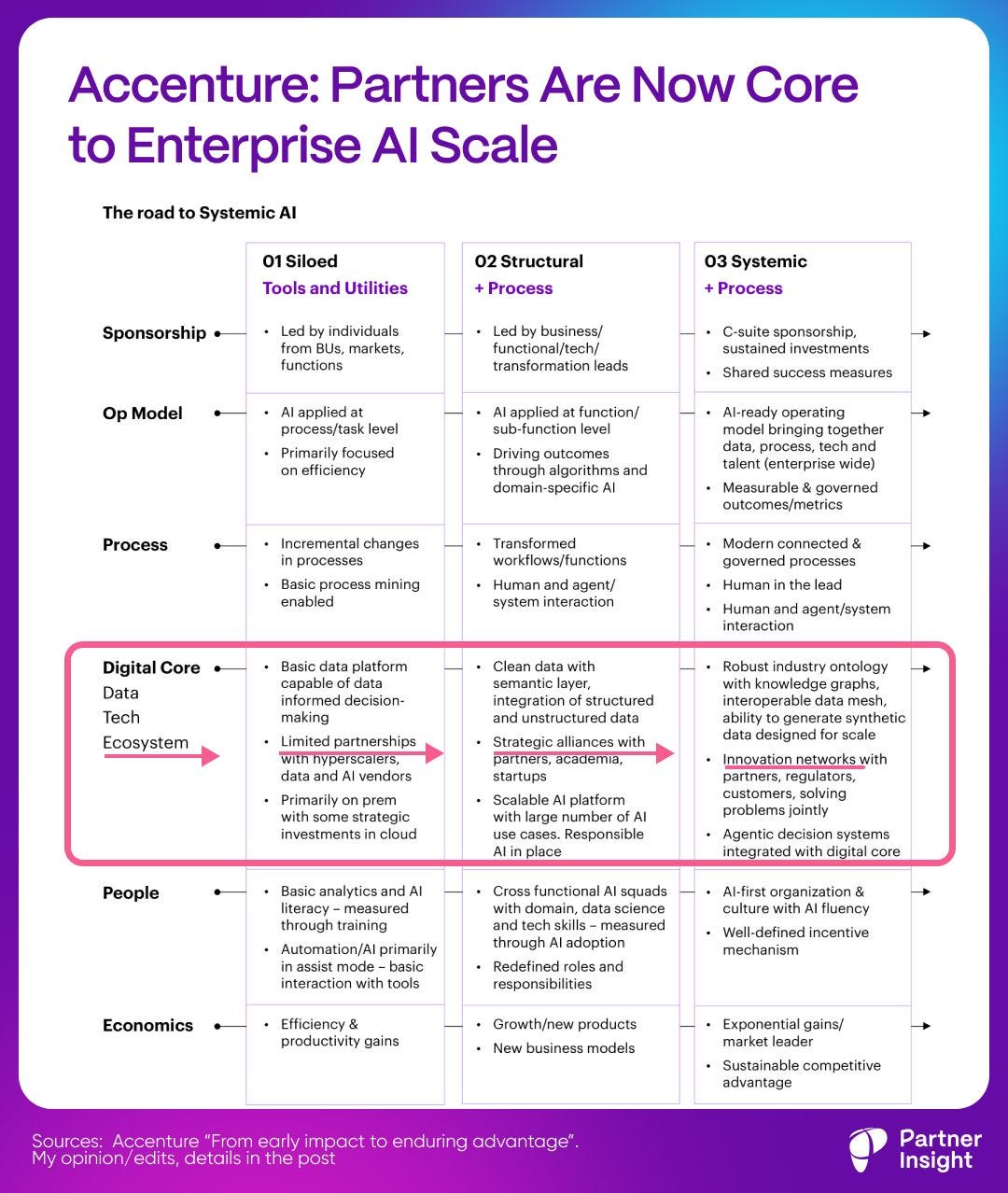
That is what stood out to me in a new report authored by Accenture’s Chief Strategy and Services Officer and Chief Products Officer — two leaders who oversee $8B+ portfolio and 6,000 AI engagements.
The attached chart is telling.
Partners drive in many ways the AI transformation from Siloed AI to Structural AI to Systemic AI:
Early stage: limited partnerships with hyperscalers and AI vendors
Next stage: strategic alliances with partners
Advanced stage: innovation networks with partners
As enterprise AI matures, partners move from external suppliers to part of the architecture required to scale.
Accenture underscores:
“To accelerate the architecture modernization that AI demands, technology organizations have to engage with ecosystem partners to access talent, leverage specialized tools and co-innovate.”
That line should get the attention of alliance leaders, because it validates something many of us are already seeing:
AI demand is creating demand for cloud foundations, partner orchestration, integration, and modernization.
The numbers behind it are striking
86% of organizations plan to increase AI investment in 2026. But only 21% have redesigned end-to-end processes with AI at the core.
Budget is flowing. Readiness is not. That gap is where a lot of ecosystem value will be created.
Cloud sits right at the center of it.
Accenture writes: “Organizations that unlock AI’s full potential treat cloud adoption as a strategic requirement.”
And then: “Only 16% of organizations, those with mature cloud foundations and strong guardrails, can capture additional benefits from AI and agentic systems.”
Cloud readiness is becoming one of the clearest dividing lines between companies running pilots and companies capturing real AI value.
At the same time, 70% of technology budgets still support legacy systems, which helps explain why partners matter even more now.
Most enterprises cannot modernize data, governance, security, and architecture fast enough on their own.
That is also why Accenture’s buy-build-boost framing is useful:
Buy where speed and existing capability matter
Build where differentiation is real
Boost by layering proprietary data, workflows, and guardrails on top of partner platforms
The technology framework is increasingly a partner strategy framework.
Meanwhile, as AI pushes enterprises toward cloud-native foundations and ecosystem-led modernization, hyperscaler ecosystems gain even more gravity. Which brings us back to their marketplaces becoming more important over time.
3 takeaways:
Position around AI readiness, not just partner motions
Be clear where your company fits: buy, build, or boost
Expect partners and cloud ecosystems to become more central in enterprise AI buying and delivery
Join our GCP Marketplace Strategic Breakfast at Google Cloud Next ‘26
I’m delighted to invite you to the GCP Marketplace Strategic Breakfast at Google Cloud Next ‘26 — a curated breakfast for senior alliance and cloud GTM leaders.
We’ll go beyond the announcements to discuss the Google Cloud Marketplace, AI, and ecosystem moves that matter most coming out of Next — and how leading ISVs can turn GCP Marketplace into co-sell momentum, partner leverage, and revenue in 2026.

Featured Speakers
Dai Vu — Managing Director, Google Cloud Marketplace (driving its triple-digit growth, billions in GTV)
Subhash Jawahrani — Principal BDM, Data Platform & AI, Google Cloud Marketplace
John Jahnke — CEO, Tackle.io
Roman Kirsanov — Founder & CEO, Partner Insight
By Thursday morning at Next, the major announcements will already be out. This breakfast is where we process what they mean - with the people shaping the strategy. Plus we’ll compare notes with operators who are actually scaling on the platform.
Why join
Google Cloud Marketplace direction — from the top. Dai Vu leads GCP Marketplace globally. Hear from him on what’s coming next — in a room of 50, not a keynote of 5,000.
Direct perspective from Google Cloud team — what matters most for ISVs and ecosystem leaders in 2026
Operator-level insight. How leading ISVs are structuring co-sell, scaling through channel, leveraging AI and operationalizing marketplace GTM on Google Cloud
Network in senior peer room — alliance, marketplace, and GTM leaders from high-growth ISVs, ecosystem partners, and Google Cloud
You’ll leave with a sharper view of Google Cloud Marketplace priorities and a short list of ideas worth acting on during Next and after it.
📅 April 23, 7:30–9:30 am PT at Hakkasan Restaurant Las Vegas (near Mandalay Bay)
Spaces are limited and confirmation is required.
Thanks to our partner Tackle for supporting this event

Tackle (now part of AppDirect) is the Cloud GTM platform built to help software companies win in the cloud. As the category creator and leader in Cloud GTM, Tackle enables ISVs to list, transact, and scale through the hyperscalers.
Tackle streamlines every stage of the cloud marketplace journey with deep co-sell automations, private offer management, and real-time marketplace analytics.
AWS AI Crossed $15B — Partner Opportunity Got Much Bigger
AWS AI crossed $15B+ run rate — putting it in the same revenue tier as OpenAI and Anthropic. Andy Jassy’s shareholder letter confirmed: the AI business on AWS isn’t a forecast. It’s already massive.
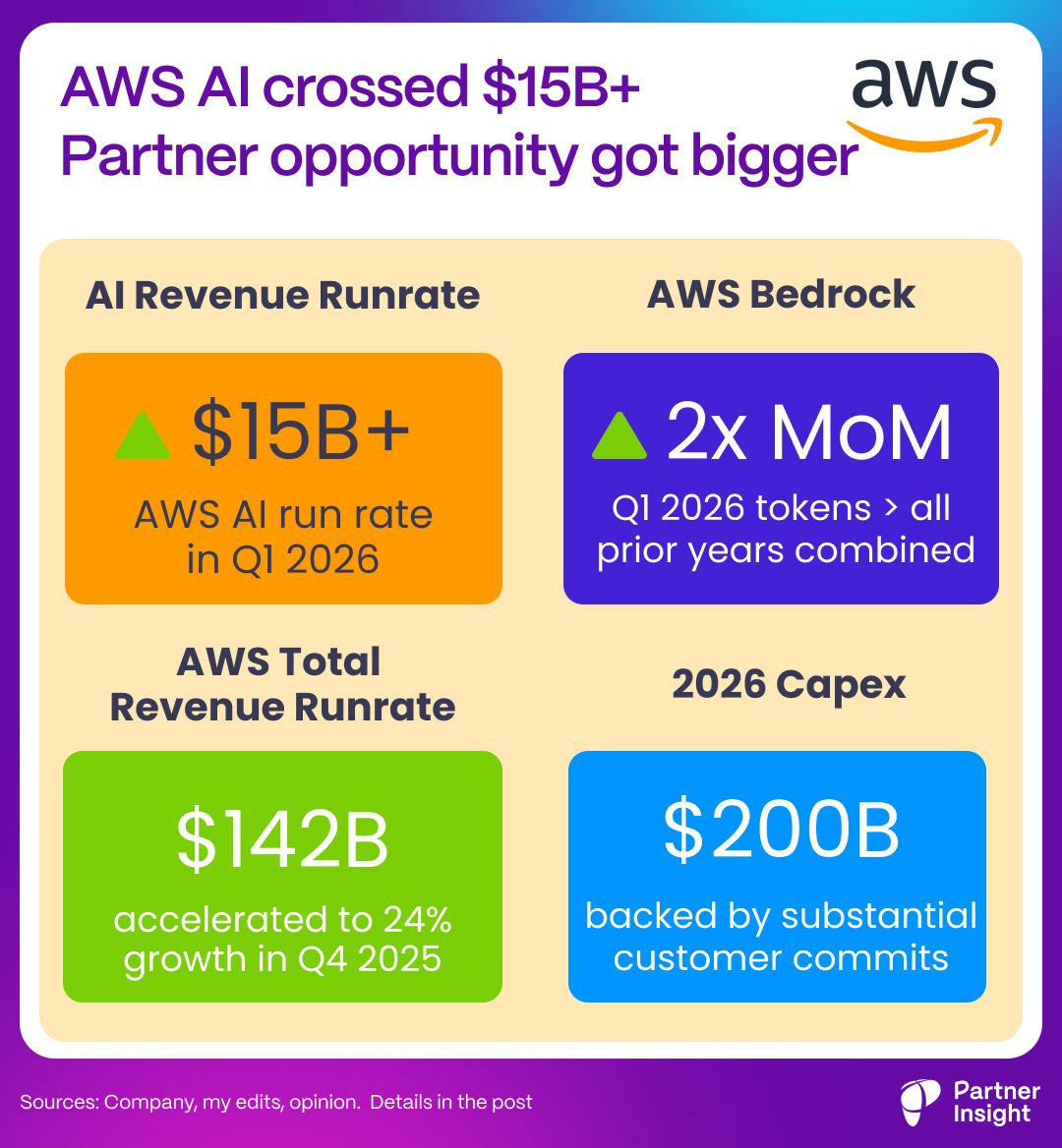
Here’s what last week’s letter reveals, and why partners should pay close attention.
AWS grew 20% YoY to $129B in 2025, with Q4 accelerating to 24% at a $142B run rate.
But the AI-specific number is what stands out.
Three years into the AI wave, AWS AI revenue is “ascending rapidly”— its $15B run rate in Q1 2026, ~260x larger than AWS itself was at the same point in its history.
For context, Microsoft’s last explicit AI revenue disclosure was ~$13B annualized last year
Google Cloud has been vaguer, describing “billions in quarterly AI revenue.”
On the lab side, Reuters reported OpenAI at $25B+ and Anthropic at $30B+ — but those comparisons are a bit messy because the business models and revenue accounting differ significantly from hyperscalers.
The point: AWS AI is now a top-tier AI revenue business in its own right. That shapes the co-sell focus and the math for every ISV and partner on the platform.
Three signals partners should watch:
1. Bedrock is becoming the center of gravity
Jassy said Bedrock nearly doubled month-over-month in March and processed more tokens in Q1 2026 than in all prior years combined.
2. AWS is showcasing a full AI stack
Jassy explicitly named SageMaker, Bedrock, Trainium, Strands (agent-building), AgentCore (agent environments), and turnkey agents like Kiro, Transform, and Quick. Each one is a potential integration point — and a “better together” story that AWS sellers can bring to customers.
3. ~$200B in capex for 2026, backed by customer commitments
Jassy said customer commitments already cover a substantial portion of this spend. That means the cloud commit backlog is growing fast. More commits = more marketplace-eligible budgets.
One more important number:
Jassy reiterated that 85% of global IT spend is still on-prem. AWS is a $142B business and has barely scratched the surface.
The migration, modernization, and AI adoption work ahead will take years — and ISVs who position their products as part of that journey will ride the wave alongside AWS.
What this means for alliance leaders:
If your product touches AI, data, or agent workflows — align your roadmap to Bedrock and the broader AI stack. That’s where AWS focus and incentives are headed.
$15B is a very large number. So is the investment behind it. The $200B capex figure is your market sizing slide for the years ahead (apply partner multiplier)
If most IT spend is still on-prem, the real partner prize is helping customers modernize and operationalize AI at the same time.
What’s your read on what AWS AI growth means for ISVs and partners?
Source: Andy Jassy’s shareholder letter
Insights from Co-Sell & Joint GTM Panel: Google Cloud Marketplace Online Event
During our recent Google Cloud Marketplace event, we brought together leaders from Google Cloud, MongoDB (6X Partner of the Year), Quantum Metric (~60% of revenue influenced by GCP), and Tackle to break down what it actually takes to scale on Google Cloud Marketplace.
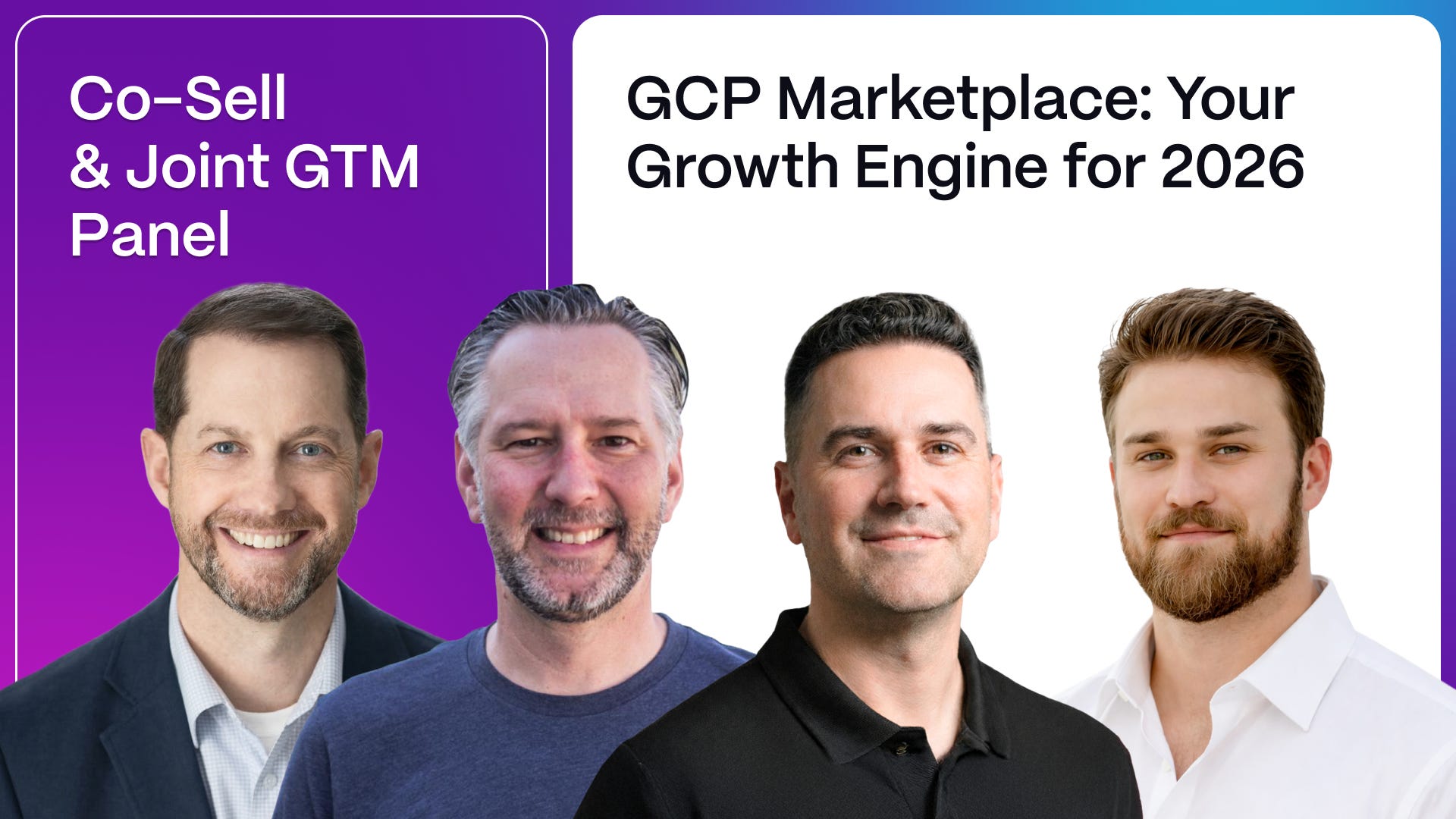
Here are my top 5 takeaways from the panel with Kevin Goodspeed (Google Cloud):
1. Reframe how customers think about committed spend
John Murray (MongoDB — 6X GCP Partner of the Year):
“A lot of them view it as a sunk cost or just a procurement exercise. In reality, it’s a strategic lever.”
When a customer buys your software on Marketplace, they’re not adding net-new spend. They’re accelerating initiatives already budgeted for — burning down commit while maximizing ROI on dollars already committed.
Do that well, and “Marketplace stops being a billing vehicle and becomes this growth engine. You’re not just closing a single deal, you’re unlocking this multi-phased project where customers modernize their entire platforms.”
2. Co-sell is a system, not a tactic
John Jahnke (Tackle.io processes $1B in marketplace transactions/month):
“This is a strategy, people, process, and technology problem. The automation’s not going to solve the problem for you.”
The pattern he sees often — broad-based enablement where nothing happens. His advice: start with a tiger team. 5 deals. 20 co-sells. Learn what works, build the story, then go broad.
Russell Efird on the other side:
“If you wait till the very end, most of your deals are gonna have friction. That’s not the point of co-selling.”
Early engagement is what unlocks the co-sell & marketplace benefits.
3. Align to what matters to the Google rep right now
Russell (~60% of Quantum Metric’s net-new revenue is influenced by GCP) was direct:
“The key to maintaining strong engagement in that co-sell motion is aligning to what matters most to the Google rep in the moment.”
This year, that’s Gemini Enterprise. Quantum Metric built their Felix AI agent on Vertex, leveraging Gemini Pro, supporting ADK and A2A protocol. That alignment is what drives field attention at scale.
4. PLG changes the conversation
MongoDB offers a 14-day free trial on GCP Marketplace. By the time sellers engage,
“it’s no longer this theoretical thought idea — it’s about scaling something that’s already working.”
The conversation shifts from “why this ISV” to “how fast can we expand.” They run ~4 webinars/year with a direct CTA to the free trial. Simple, repeatable, frictionless.
5. Agents meet marketplaces
John Murray:
“Marketplaces are going to be the primary distribution channel for agents, not just software. They’ll be optimized for agents and evolve towards selling capabilities and outcomes.”
Still early — but the distribution question is already being answered.
📍 PS. Heading to Google Cloud Next?
We’re hosting a GCP Marketplace Strategic Breakfast on April 23 in Vegas. Curated room, senior leaders — Dai Vu, Subhash Jawahrani, John Jahnke will be speaking
📅 April 23, 7:30–9:30 am PT at Hakkasan Restaurant Las Vegas (near Mandalay Bay)
Spaces are limited and confirmation is required.
Looking forward to seeing you in Vegas!